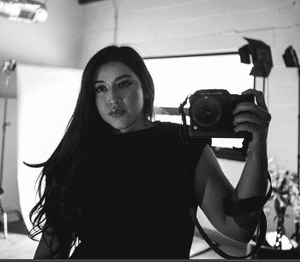
April 24, 2026 | Dave Lindquist | Article published originally on IBJ.
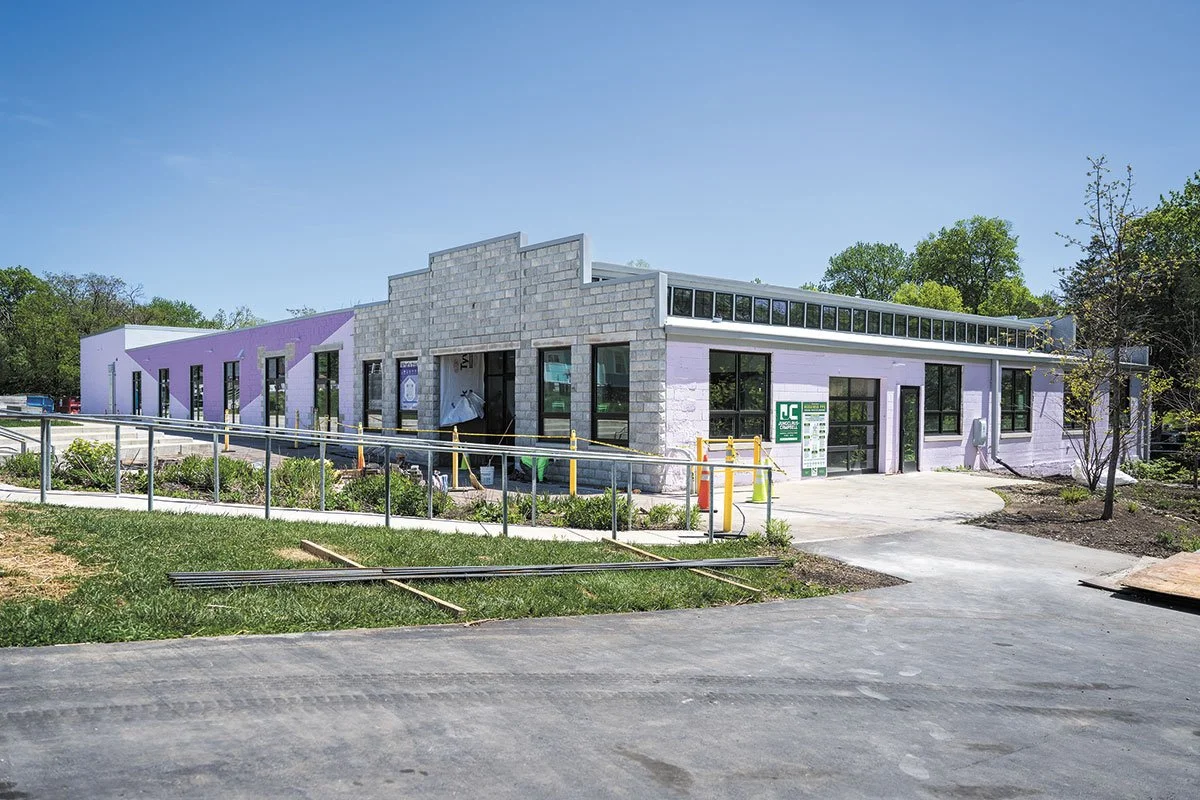
The original, $2 million budget for renovating the main CAMI building eventually ballooned to $7 million. CAMI will be free and open to the public Wednesday through Sunday. (IBJ photo/Chad Williams)
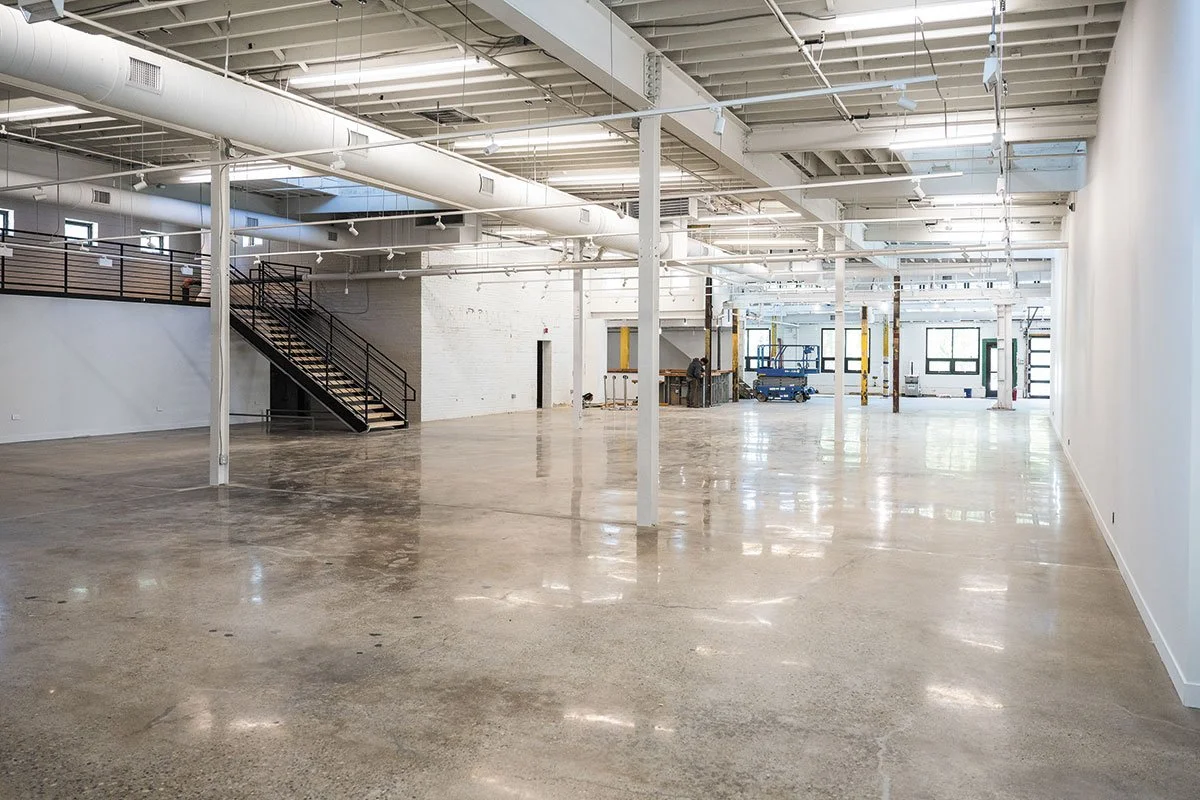
The main building’s May 1 opening will be a culmination of eight years of planning and renovation. The project was jump-started by a $3 million grant from Lilly Endowment Inc. (IBJ photo/Chad Williams)
The opening of the main building of the Contemporary Art Museum of Indianapolis — an ambitious combination of galleries, artist studios, retail storefronts, culinary arts program and a performance hall — is merely days away after more than seven years of planning.
Counting down to the 40,000-square-foot building’s May 1 debut has been hectic but rewarding, said Jim Walker, co-founder of artist-led nonprofit Big Car Collaborative.
“Starting something with so many variables and so many galleries and studios and storefronts all at once has been a lot to do, but I really feel good,” Walker said of the building less than a block southeast of Garfield Park.
Big Car Collaborative’s strength-in-numbers philosophy makes the rollout enjoyable, he said.
More than 25 artists are contributing to initial exhibitions at the Contemporary Art Museum of Indianapolis, or CAMI. Eighteen artists will occupy studios. More than 10 people will serve as proprietors of four retail storefronts. Indianapolis-based Cunningham Restaurant Group will move its test kitchen from downtown to the building. And 10 people, including Museum Director and Chief Curator Shauta Marsh, make up the Big Car staff.
“You’re looking at more than 60 people who are starting right off as participating in it,” Walker said.
May 1 represents a beginning for the main building, 1125 Cruft St., but the idea for its use as a multifaceted facility dates to 2018 and a $3 million grant Big Car received from Lilly Endowment Inc.
Of the $3 million, $1.8 million was spent on renovations. Environmental remediation work and the pandemic contributed to delays, and a projected price tag of $2 million became more than $7 million in reality.
Big Car, known for spearheading the creative and recreational attractions of Spark on the Circle, views CAMI’s main building as an expansion and amplification of what’s been offered at its nearby Tube Factory art space for the past decade. The 12,000-square-foot Tube Factory hosts contemporary art shows and is home to the Normal coffee shop.
Admission to CAMI is free and open to the public. The main building’s hours of operation will be 9 a.m. to 6 p.m. Wednesday through Friday and 9 a.m. to 3 p.m. Saturday and Sunday.
Nature and industry
A yellow hexagon, a shape chosen to signify collaboration, will serve as signage above the main building’s entrance. Husband-and-wife team Walker and Marsh point to hexagons seen in honeycombs and steel bolts as a link between nature and industry.
Artist Juan William Chávez built a bee sanctuary on the art museum’s campus in 2018. Big Car worked with general contractor Jungclaus-Campbell Co. and architectural firms Rundell Ernstberger Associates and Blackline Studios — all Indianapolis companies — to reconfigure green space on the campus and renovate the main building that dates to the late 1800s.
Long before the bee sanctuary, cows and horses were significant creatures on site. The western part of the main CAMI building was the Weber Milk Co.’s dairy barn, and horses were used in the delivery of milk. The building grew piecemeal and became headquarters for Tube Processing Corp., a manufacturer of jet-engine components for the aerospace industry.
Tube Processing donated the building to Big Car in 2021.
Big Car introduced “Contemporary Art Museum of Indianapolis” as the blanket rebranding of the 5-acre campus in December. The organization also oversees 18 affordable-living homes for artists in the neighborhood.
Rick Wilkerson, who operated Missing Link Records in Indianapolis from 1993 to 2008 and subsequently founded the shop that became Irvington Vinyl & Books, will work in one of CAMI’s storefronts.
He’s a co-founder of new business HQ Books & Records.
“What Jim and Shauta and everybody else involved in Tube Factory and CAMI have done is nothing short of miraculous,” Wilkerson said. “They’ve revitalized that whole area, and this thing is going to change that by tenfold. HQ Books & Records is part of something bigger. We’re not going to have to drive a lot of the traffic, although I hope we do drive traffic to CAMI. But I think there’s going to be a lot of traffic just because of CAMI.”
A community catalyst
The Garfield Park neighborhood was not trendy when Walker and Marsh moved there in 2011 and initiated public art projects. Although activity at the 10-year-old CAMI campus is considered a catalyst for businesses that have since opened along Shelby Street, the neighborhood is still a work in progress.
In the words of Adam Henze, co-owner of Indy Type Shop, 2621 Shelby St., “business is very up and down right now in Garfield Park.”
On a good day, people shop at a farmers market in the park, visit the park’s tropical conservatory, walk their dogs, attend a CAMI exhibition, have a meal at Parkside Public House and stop by Indy Type Shop. On other days, the neighborhood lags behind other cultural districts in the city. (Garfield Park became one of the city’s 19 cultural districts in 2025.)
“Most of the businesses are very new,” said Henze, who’s married to Indy Type Shop’s co-owner, Siren Hand. “We’re trying to get more people to see it as a walkable space.”
Henze said tourists provide a significant amount of business for Indy Type Shop, which is a hybrid of typewriter repair shop, rare and used bookstore, and performance space for spoken-word events.
CAMI’s demographic might be similar, Henze said.
“I think the neighborhood has an opportunity to decide: Who is CAMI for? Is it for us in the neighborhood? Is it a destination for tourists? I think CAMI is going to be successful, no matter what happens,” said Henze, who lives in the Bean Creek neighborhood that borders CAMI’s campus to the south. “But who is going to be the person who goes to their events?”
Walker said CAMI’s new main building is designed to welcome Indianapolis residents on repeat visits. Multiple parts of the building feature sitting areas that invite extended hangouts.
“There’s no ticket charge,” Walker said. “There’s no pressure to buy anything.”
The galleries, Walker said, are conducive to “slow art” viewing.
“You could encourage people, either independently or in a group, to just do fewer things,” he said. “Look at a work of art for 30 minutes. Try to slow down and not be so distracted.”
What to see and hear
The main building’s first exhibition in its biggest gallery will be “Campo de Resonancia,” or “Resonant Field,” by Puerto Rico-based artist Ivelisse Jiménez.
Featuring hand-painted transparent and colored vinyl and reclaimed plastics, Jiménez’s work parallels the building’s story as a salvaged structure.
In December, Jungclaus-Campbell owner Bill Nagler told IBJ that Big Car didn’t choose an easy path.
“People tear down buildings and start new because adaptive reuse is difficult,” Nagler said. “But the end result is going to be unique. There’s not going to be anything else like this in the city.”
Two exhibitions include the main CAMI building as inspiration:
• “Drafts,” by Jess Dunn & Sylvia Thomas, is a video documentary that traces the building’s history through archives, primary source documents and artifacts.
• “You’re Standing Inside the Instrument: A Score for 19 Buildings” is a sound-based installation in which artists recorded audio at Indianapolis buildings selected as favorites by a panel of architects and designers. The roster of sites includes the main CAMI building alongside the Madam Walker Legacy Center, Irwin Library at Butler University, Crispus Attucks High School and more.
In 2016, Tube Factory opened with an exhibition titled “The People’s 500,” which celebrated the relationship between the Indianapolis Motor Speedway and its fans. This year, CAMI will showcase “The Speedway’s Attic,” an unofficial history of the track assembled by award-winning journalist Will Higgins.
Behind the scenes at CAMI, 18 artists will work in new studios. One of the studio occupants, digital artist and photographer Julysa Sosa, said she’s eager to be affiliated with a contemporary art museum that doesn’t charge an admission fee.
“It feels good to be part of the first cohort and to hopefully shape and influence alongside the other artists what art looks like in Indianapolis,” Sosa said. “I’m looking forward to building community and bringing more art to people.”
Sosa moved from San Antonio, Texas, to Indianapolis in 2022. She said the city’s lack of a museum dedicated to modern art represented a gap in culture.
CAMI is poised to be the spiritual successor to the Indianapolis Museum of Contemporary Art. IMOCA debuted in 2001 as a “museum without walls” and dissolved in 2020, when it was known as Indianapolis Contemporary.
Walker said studio artists will pay monthly rent in a range of $450 to $575. More than 80 artists applied for the 18 spots.
Sosa said her rent is more affordable than what she could find in Texas.
“This is such a thoughtful and artist-forward contract,” she said. “I feel like I’m valued and not just paying to a landlord. I know my dollar goes directly back into supporting the artists here in Indianapolis.”
’A stabilizing factor’
CAMI’s main building is designed to generate revenue through studio tenants, retail tenants, ticketed events, and a bar and cafe known as Stall. Walker said Big Car is working to raise $2 million to cover outstanding construction costs.
Four tenants are lined up for the five retail storefronts along the north side of the main building.
In addition to HQ Books & Records, the stores are Hepatica Pottery Collective, Indy Plant Room and Line+Form Art Center.
Wilkerson’s co-founders at HQ are Nick Ohler (owner of independent record label Avant Night), Kelsey Simpson (founder of small publishing advocate Authentic Resource), Tom Burris (owner of independent record label Great Lemon!) and Sam Murphy (creator of Doomtone micro toys).
The shop will sell records, CDs, cassettes, used books, zines, comics and toys.
“You won’t go there for $1 records, and you won’t go there for what’s released on Record Store Day,” Wilkerson said. “But you will go there for things that maybe nobody else has.”
By partnering with Cunningham Restaurant Group founder Mike Cunningham on the test kitchen in the building, Walker said, CAMI can look to someone who’s created decorated restaurants such as Vida, Livery and Commission Row.
“When you are trying to do so much on your own and doing a lot of different weird stuff for the first time, to have someone doing a big portion of it who’s done it so many times before is very much a stabilizing factor,” Walker said. “It creates a level of sanity in a pretty insane-like situation.”
While Cunningham’s company will provide food for special events at CAMI, it will not create menu items for the cafe.•